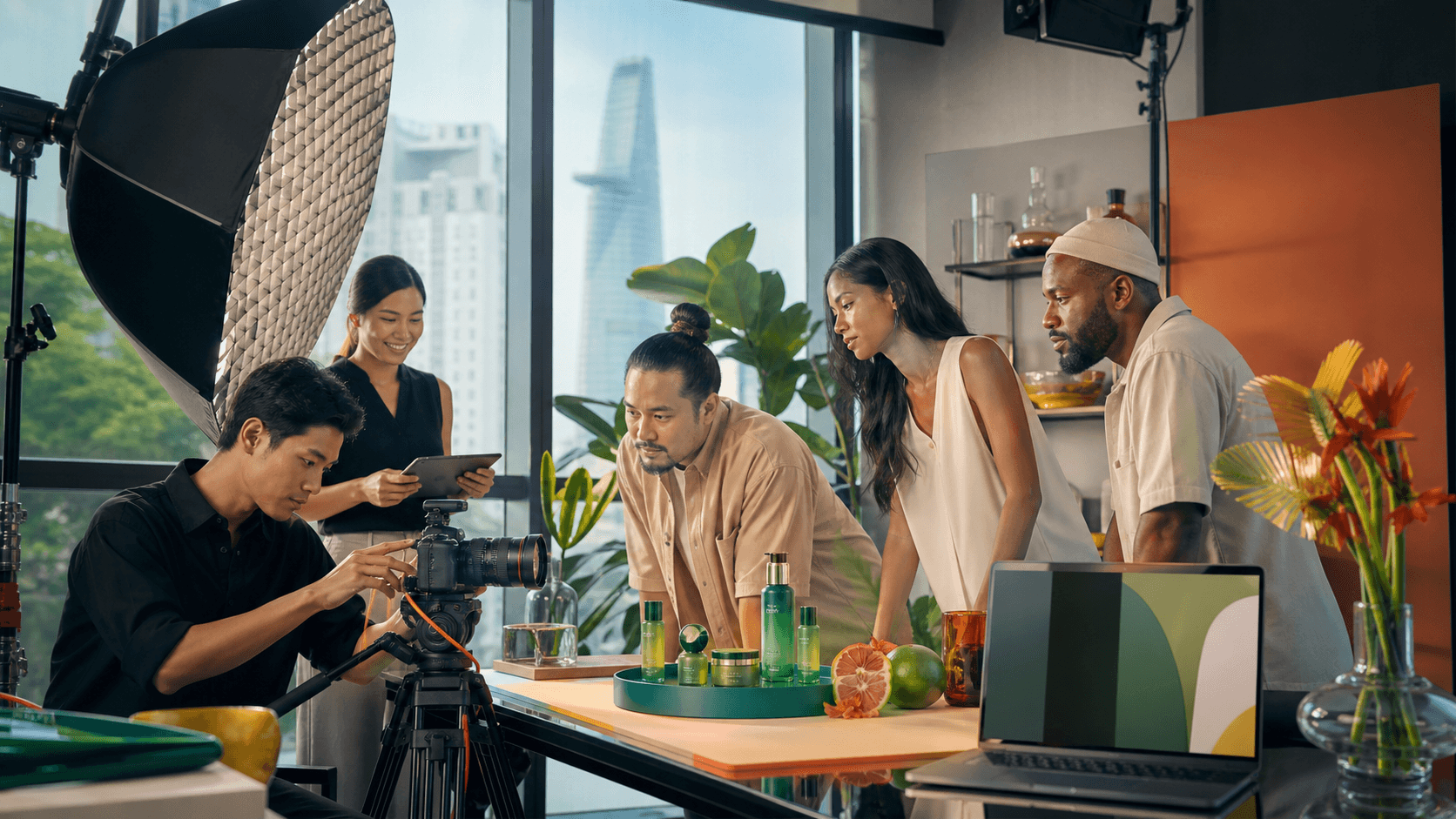
Turn AI Video Into a Premium Brand Advantage
Premium AI-generated video services can help brands move faster, test more ideas, and create striking visual worlds. Yet premium results do not come from using the newest tool alone. They come from clear strategy, strong creative direction, careful editing, and choices that support how your brand wants to be seen.
Before production begins, we recommend defining what "premium" means for your brand. For one company, it may mean cinematic lighting and rich sound. For another, it may be a restrained visual style, a warm tone of voice, or highly local details that make the message feel familiar to the right audience. The goal is not to make something that simply looks expensive. It is to make something that feels unmistakably yours.
AI works best as a creative accelerator, not a replacement for brand thinking. Our process combines AI-supported exploration with human-led concepts, art direction, editing, and storytelling judgment. That balance helps keep the work original and purposeful rather than visually impressive but emotionally empty.
Every video also needs a business reason to exist. A product launch, executive message, retail activation, employer brand campaign, social content series, or annual brand film will each need a different creative approach. When the objective is clear, the story, format, and final delivery become much easier to shape.
Start with a Strategic Creative Brief
A strong creative brief protects your project from vague ideas and inconsistent results. It gives creative teams, stakeholders, and AI production workflows the same definition of success before visual generation begins.
We encourage you to identify the audience, campaign goal, channels, and desired action early. A short social video cannot be planned like a website hero film. Likewise, an event-screen piece needs a different pace and visual structure than a video designed for mobile viewing with sound off.
Useful brand inputs include:
- Visual identity guidelines, approved logos, colors, typography, and product details
- Approved messages, tone of voice, and audience insights
- Examples of work that feels aligned with your brand
- Examples that feel too generic, too playful, too formal, or otherwise off-brand
- Required campaign messages and legal or compliance notes
Avoid instructions such as "make it premium" or "make it viral." Those phrases mean different things to different people. Instead, give practical direction. Describe the emotional response you want, the pacing, color palette, visual references, message order, and any required brand moments. Clear criteria give everyone a better way to judge creative work.
Protect Brand Consistency at Every Frame
AI can produce a large number of visual options quickly. That speed is useful, but it can also create risk. If each output follows a slightly different style, your campaign can start to feel scattered across paid media, social channels, websites, events, and internal communications.
Before generating final assets, we build a visual framework around the approved direction. This framework can guide composition, lighting, camera movement, character styling, typography, logo treatment, motion design, and sound. When those parts work together, a vertical social asset can still feel connected to a widescreen brand film.
Frame-by-frame review matters, especially for products and established brand assets. AI-generated imagery can introduce altered packaging, incorrect product details, distorted logos, or visual metaphors that confuse the message. In categories where accuracy and trust matter greatly, those small errors can affect how audiences view the brand.
Once the core visual language is approved, modular assets can make campaign adaptation more efficient. We can shape a unified direction into formats for short video, display screens, regional audiences, paid placements, and seasonal extensions without losing the campaign's identity.
Balance AI Speed with Human Creative Judgment
One of the best uses of AI is early-stage exploration. We can use it to test mood films, visual worlds, storyboards, and animatics before a campaign moves into final production. This gives stakeholders a clearer view of different creative routes and helps teams make decisions with more confidence.
Still, the first acceptable output should rarely be the final output. Premium work depends on the details people notice, even when they cannot explain why something feels right or wrong. A human creative team can spot weak composition, awkward movement, unclear narrative beats, unrealistic expressions, cultural mismatches, and moments that do not carry the intended feeling.
During a thoughtful production process, we review questions such as:
- Does the story make sense without extra explanation?
- Does the visual style match the brand's market position?
- Are movement, timing, and transitions smooth and intentional?
- Do cultural details feel respectful and relevant to the audience?
- Does each scene support the campaign message rather than distract from it?
Experienced creative directors, designers, editors, strategists, and producers bring judgment that software cannot provide on its own. They shape the concept, select the strongest generated material, refine the narrative, and make sure the final video serves people, not just the technology behind it.
Build Rights, Transparency, and Quality Controls
High-visibility AI video needs good governance as well as good visuals. This is particularly true when a campaign includes recognizable people, sensitive topics, proprietary assets, or audiences across different markets.
Rights and permissions should be confirmed for brand materials, talent likenesses, music, voiceovers, reference images, and third-party content. We recommend setting up a review path that includes the appropriate internal legal and stakeholder teams before production moves too far forward.
Brands should also avoid AI-generated representations that could mislead an audience, suggest a real event that did not happen, or imitate an identifiable person without approval. Depending on the campaign and audience, disclosure or labeling may be appropriate. Clear internal rules make these decisions easier and help protect trust.
Quality checks should continue from concept approval through final export. Review factual details, visual continuity, subtitles, accessibility needs, audio clarity, aspect ratios, and platform specifications. A beautiful master film can lose its impact if captions are missing, the sound is unclear, or the format does not suit the viewing environment.
Plan Your Next High-Impact Video Campaign
October is a useful time to review the upcoming campaign calendar before seasonal deadlines begin to stack up. Rather than trying to transform every content stream at once, start with one meaningful use case. A holiday campaign, annual brand film, product launch, or early-year marketing initiative can set a practical quality benchmark for future premium AI-generated video services.
Bring creative, marketing, legal, and production stakeholders into the process early. Shared expectations reduce late revisions and make room for bolder ideas within clear guardrails. The most effective approach is not to chase AI for its own sake, but to use it with intention, strong standards, and a story your audience will remember.
Turn Your Vision Into a Polished Video Asset
At Pierre Vs The World, we help brands translate strong creative direction into video that feels refined, purposeful, and ready to perform. Discover our premium AI-generated video services to see how we can support your next campaign with thoughtful strategy and production expertise. Our team is ready to help you create visuals that align with your brand standards and audience expectations.